
The UK home care sector is facing a growing efficiency crisis. Demand is rising, but many agencies are still held back by manual processes and paper-based systems that make day-to-day operations harder than they need to be. Rostering often happens in spreadsheets, information is duplicated across multiple tools, and managers spend hours each week chasing updates or correcting errors.
UK home care agencies routinely lose a significant amount of time to manual rostering, updating care plans and correcting paperwork. This isn’t just theory, TSF Healthcare Solutions reported saving more than 48 hours every week after switching to CareLineLive, despite having a team of just 10 carers. Their Managing Director says the biggest shift has been the “time that was being lost on the previous system,” now recovered through digital rostering, automated payroll, invoicing and streamlined care planning.
Another client, In Friendship Limited, who look after 60 clients report saving up to three days each week thanks solely to CareLineLive’s GP Connect integration. Integrations such as these help mitigate the delays many providers find in obtaining client information from the NHS as CareLineLive found in a recent survey.
These outdated methods slow everything down. Paperwork creates delays, fragmented systems lead to mistakes, and manual scheduling makes it difficult to balance travel time, staff availability and client needs. The result is stress for teams, rising costs and avoidable risks around compliance and the expectations of regulators.
Integrated digital systems are solving these problems. Home care management platforms combine rostering, visit management, payroll, compliance and reporting in one place. They automate routine admin, eliminate paperwork and virtually eliminate common payroll errors, while boosting operational capacity by around 30% (Building Better Healthcare). With millions of hours of home care delivered each week, improving rostering and care management efficiency is now essential for delivering safe, consistent, high-quality care.
The efficiency problem in home care
Paper-based system limitations
Paper-based systems create time waste because every update requires manual rewriting or duplication. Many agencies report losing a full day or more each week to manual rostering and admin. Crescent Homecare reports saving 20 to 30 hours every week after moving to CareLineLive – significantly reducing paperwork, rota calls and administrative chasing.
These inefficiencies don’t just waste time, they create risk. Manual roster updates often lead to incorrect timesheets, pay disputes and avoidable errors. Paper-based evidence also adds to the CQC burden, because key documentation is scattered rather than stored in one digital place.
The true cost of manual processes
Manual processes add administrative overhead because managers spend hours each week allocating visits, fixing conflicts and checking paperwork. These inefficiencies lead to missed visits and scheduling clashes, especially when availability changes at short notice. The impact extends to staff satisfaction, as carers lose confidence when rotas change frequently or travel time is poorly planned. Delayed paperwork also slows invoice production, causing cash flow pressure for agencies relying on timely local authority payments.
What care management systems are
Core components of modern care management systems
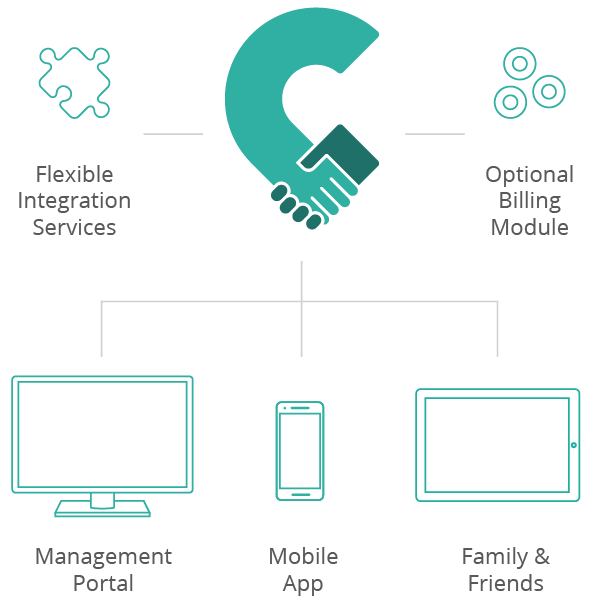
Modern care management systems include a management portal for office teams, mobile apps for carers and family portals for transparency in care delivery. They integrate rostering, real-time updates, payroll, eMAR and reporting into a single interface. These systems connect to other tools through integrations such as GP Connect. Integrations and exports are often possible with accounting software and local authority portals.
Cloud-based vs on-premise systems
Cloud-based systems provide accessibility because managers and carers can update information from any device. They strengthen data security through encrypted storage, regular backups and ISO-aligned controls. Cloud platforms scale easily as agencies grow, allowing new branches and staff to be added without extra servers or hardware. They also offer lower total cost of ownership, while on-premise systems require maintenance, physical storage and specialist IT support.
Rostering and scheduling efficiency gains
Rostering software improves care management efficiency by digitising scheduling, managing travel time and giving managers real-time visibility of unallocated visits. This is the core operational driver of productivity in UK home care.
Visit scheduling
Digital visit scheduling reduces roster creation time because managers can drag and drop visits, receive conflict warnings and allocate carers based on availability patterns. The system highlights clashes instantly, meaning fewer missed visits and faster resolution of rota gaps. “Rounds” functionality will allow managers to optimise visit routes logically, resulting in reduced costs and lower travel time.
Real-time roster management
Real-time roster management improves daily operations because carers receive instant notifications for updates and same-day changes. Sick leave cover becomes easier to allocate when availability data is visible and administrators can assign visits with confidence. Unallocated bookings stay at the top of the roster so managers always know what needs assigning, reducing the risk of last-minute failures.
Travel time visualisation
Travel time visualisation increases productivity by automatically calculating mileage and travel time between visits. This reduces fuel costs and ensures rotas are achievable, especially in rural or high-traffic areas. Carers experience smoother shifts with less downtime between appointments, which increases time-to-care and reduces stress.
Payroll and invoicing efficiency
On demand payroll and invoicing functionality improves financial efficiency because timesheets, rates and billing are generated directly from verified visit data, reducing disputes and accelerating cash flow.
On demand timesheet generation
On demand timesheets reduce payroll disputes because electronic call monitoring verifies arrival and departure times. This lowers disagreement rates by up to 65% and removes reliance on handwritten notes. Agencies can manage complex rate structures, including unsocial hours, mileage, travel time and bank holiday pay, directly in the system.
Invoicing with specialist home care management software
When invoicing is integrated with home care management software cash flow improves because invoices can be generated immediately after visits are approved. Agencies using integrated billing typically reduce payment cycles by 5–10 days, especially with local authority frameworks. There is flexibility in billing with both planned and actual times catered for. Managers have full control through the system with what is sent to billing. Split billing simplifies private-and-local-authority combinations without manual calculations.
Care planning and delivery efficiency
Digital care planning increases delivery efficiency because carers have real-time access to care information, medication details and client needs from their mobile app.
Electronic care plans and eMAR
Electronic care plans reduce errors because carers can view care instructions, medication schedules and MAR charts instantly during visits. eMAR records update in real time, giving managers visibility of missed doses or clinical observations that need escalation. This reduces medication errors and improves compliance with CQC’s “safe” and “effective” domains.
Carer-client matching
Carer-client matching improves care quality because assignments can be based on skills, qualifications and continuity or personal preferences. Matching reduces client anxiety and ensures carers visit people they know. Families also benefit from clearer communication because the Care Circle Portal provides real-time updates on visit activity and care notes, reducing phone calls into the office and improving transparency across the care team.
Quantifiable efficiency metrics
Efficiency metrics show how digital systems transform capacity, accuracy and time allocation across home care agencies. These metrics are the evidence base for operational improvement.
Time savings
Time savings come from digital rostering, admin and daily coordination. Agencies typically reduce rostering time from 15–20 hours per week, freeing managers for supervision and quality assurance. Carers gain more time-to-care because travel routes are optimised and management overhead decreases as duplicate entry tasks disappear.
Error reduction
Error reduction improves reliability because digital records remove guesswork. Payroll disputes drop by 65%, medication errors decline due to eMAR prompts and missed visit risk falls as unallocated bookings are flagged immediately. Digital logs provide an auditable record that strengthens safeguarding and clinical governance.
Capacity growth
Capacity growth increases revenue because streamlined processes allow agencies to take on more clients without additional admin staff. Many providers see 30–50% operational capacity growth, driven by faster rostering and reduced back-office workloads. Staff retention improves when carers receive stable rotas with realistic travel times and clearer communication.
CQC (and other regulatory) compliance and reporting efficiency
Digital systems improve CQC compliance because evidence is captured in real time and stored in a single place for inspections.
On demand CQC reports
The range of reports available simplify inspection readiness because visit data, medication records, supervision logs and risk assessments can be exported instantly.
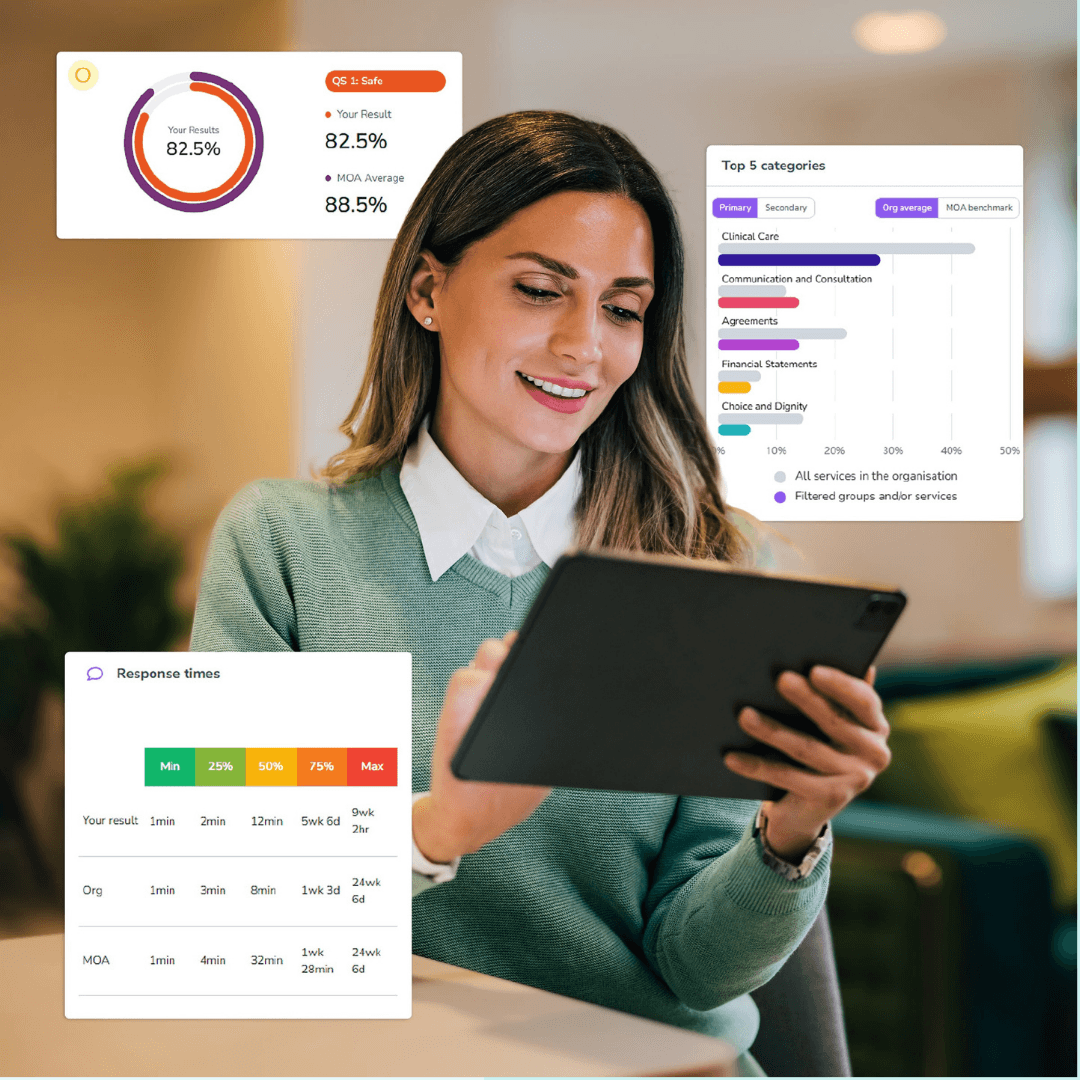
Real-time alerts highlight, missed tasks, missed and late bookings along with client and carer reviews, helping agencies maintain compliance throughout the year. Evidence gathering becomes faster and more reliable, reducing pre-inspection preparation time. Communication logs contained in the Care Circle Portal can also be included as evidence, helping agencies demonstrate involvement, transparency and person-centred care.
Within CareLineLive, unallocated bookings always stay at the top of the roster, so you can see in an instant what bookings need allocating. Additionally, care worker availability patterns can be uploaded onto the system so administrators and managers can always see who is available. Plus, CareLineLive will warn if there are any conflicts in carers for certain clients.