What happens when care records and benchmarking finally connect?
The consolidation of MOA Benchmarking and CareLineLive as sister companies under Accel-KKR’s recent investment provides a practical pathway to make data work harder for care teams and deliver better outcomes for people using care services.
The opportunity goes beyond operational synergy. It is about fairer benchmarking, smarter risk modelling, leaner data standards and lighter-touch compliance that frees time for care delivery and creates new opportunities for high quality data rich outcomes across services.

Benchmarking and compliance, built into how you work
Home care providers face increasing pressure to meet Care Quality Commission (CQC) requirements, particularly under the Single Assessment Framework. One of the biggest challenges is simply finding the time and structure to carry out regular audits, complete meaningful self-assessments, and ensure evidence is consistently captured. Without a clear process, providers can struggle with where to start, risk falling behind and feel uncertain about whether they are meeting the required standards.
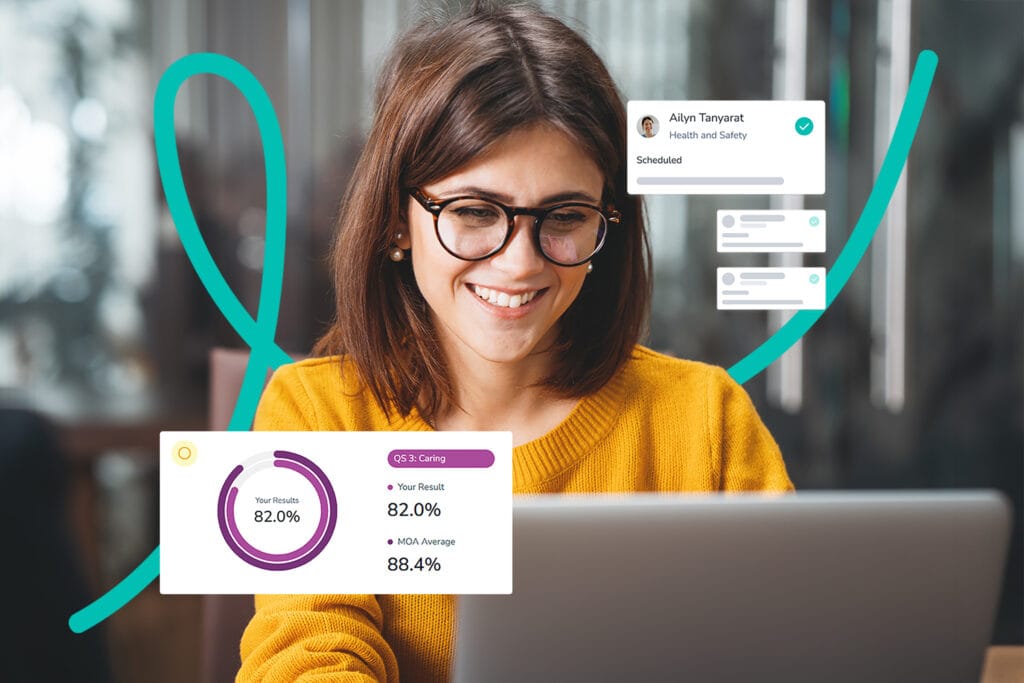
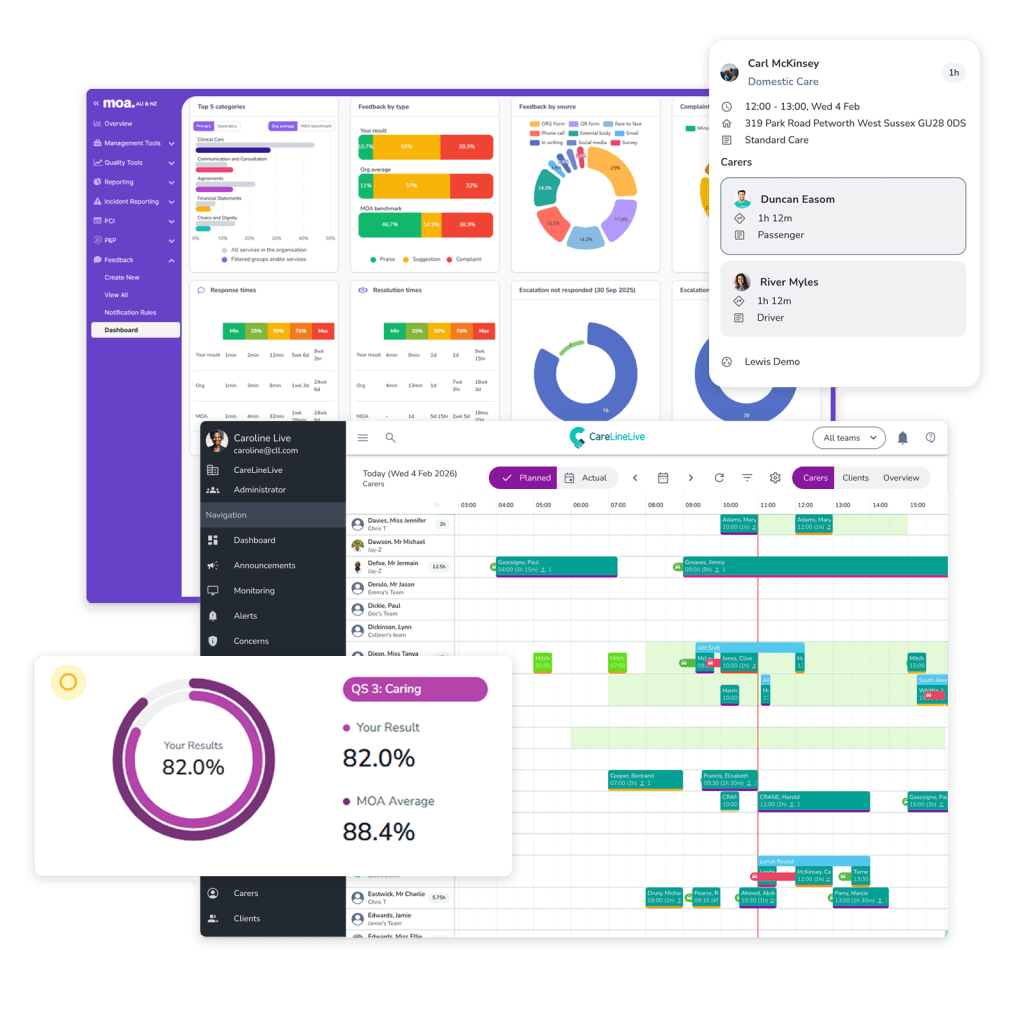
CareLineLive supports the day-to-day management of home care delivery, helping teams stay organised and maintain high standards in real time. MOA, on the other hand, is a dedicated compliance and quality improvement solution designed to guide providers through the Single Assessment Framework. It provides a structured schedule of audits and surveys, built around regulatory requirements, so providers know exactly what needs to be completed and when. By doing the groundwork and research for you, MOA reduces the administrative burden and gives home care providers confidence that they are continuously meeting CQC expectations while improving service quality.
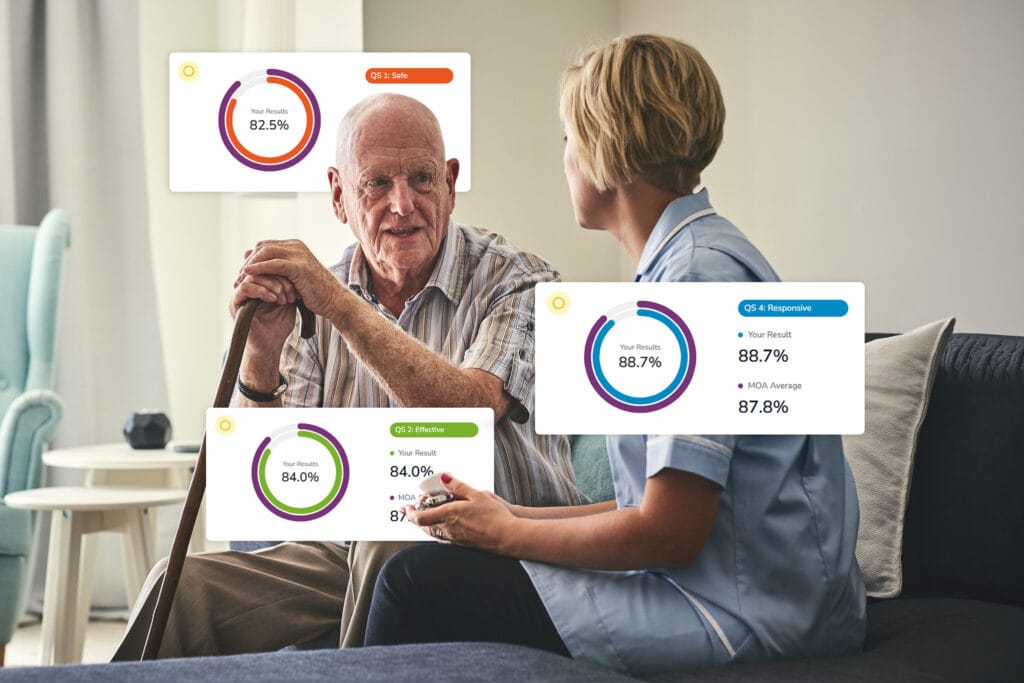
MOA provides high-level performance insights and supports internal benchmarking over time, enabling providers to measure progress and gain a clearer understanding of their results. This helps providers not only achieve compliance but also strive to deliver the highest quality of care. MOA is now included as part of a CareLineLive subscription, while remaining available to providers using other home care management systems.
Personal-level data and risk adjustment
The Department of Health and Social Care and the NHS recognise that outcomes depend on factors beyond a provider’s control. A ‘one size fits all’ approach to risk assessment and adjustment falls short of what modern home care demands.
Thinking creatively and adopting a data-driven, person-centred method will unlock sector-led opportunities for fairer comparisons and benchmarks, helping providers meet individuals’ unique needs. Linking person-centred care records from CareLineLive to MOA Benchmarking will allow risk models at an individual level allowing genuine differences to reflect true quality.
Individual risk profiles that guide home care delivery and workflow
By integrating a compliance solution like MOA with CareLineLive, providers can take a more structured and proactive approach to managing risk. Through additional modules such as Incident Management (IMS) and Risk Management, providers are able to build a detailed picture of individual risk profiles.
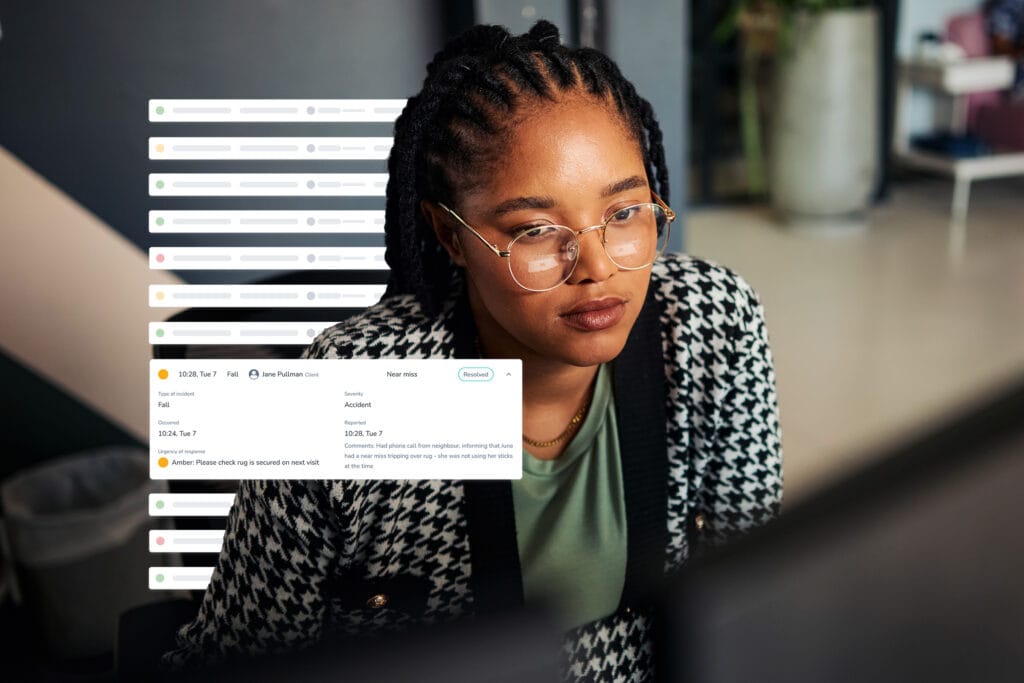
The Incident Management module enables teams to accurately log and track incidents and accidents, link them to improvement plans and receive prompts when events meet the criteria for reportable incidents. The Risk Management module allows providers to schedule and monitor risks, implement control measures and ensure actions are consistently followed through. Together, these tools support continuous improvement, reduce the likelihood of missed actions and enable safer, more effective care delivery.
Standardising sector-wide data in home care
Variation in data collection has long marked health and social care. Providers often adapt forms and systems to fit their workflows and software providers usually support this flexibility. While this meets immediate needs, it creates inconsistencies that hinder analytics and benchmarking across services.
Standards can be developed that are both practical and grounded in the realities of home care provider practice, while being informed by benchmarking feedback loops. This ensures that what is collected is not only feasible, but predictive, useful and capable of highlighting deterioration and risk of adverse events.
Automating audits of care plans
Every major aspect of care, whether pain management, wound care, medication management or the care planning process itself, requires regular review of care plans. Traditionally this has relied on sampling a small number of records, a method that is time-consuming and often limited in what it can reveal.
MOA provides a structured framework, supported by practical tools and guidance to facilitate this process. For example, care plan audits are typically completed within the Staff Practice section using a defined sample size. Once audits are complete, MOA generates reports for each tool, offering benchmarking insights, identifying areas for improvement and feeding directly into a PCI plan to support continuous improvement.
This shifts the focus. Providers no longer spend hours on manual sampling. Instead, gaps are identified upfront and allow focus on aligning practice with policies and improving care where needed. The result is a consistent audit process that reduces duplication, strengthens compliance and frees time for corrective actions and quality improvement.
Looking ahead: The future of data-driven home care
These same approaches can help providers understand their workforce. By linking outcomes to staffing data, it becomes possible to see where particular teams consistently achieve stronger results, where additional training may be valuable and how rostering patterns influence resident outcomes.
Over time, this supports a more resilient workforce by matching skills to need and spreading effective practice more widely. In this way, data becomes the bridge between people, practice and outcomes, enabling continuous improvement in a way that was not previously possible when analysis stopped at the service level.
This is a starting point; these are the opportunities we see today. The real value will come from collaborating with providers to shape what follows.
To learn how CareLineLive and MOA Benchmarking can transform your home care service: