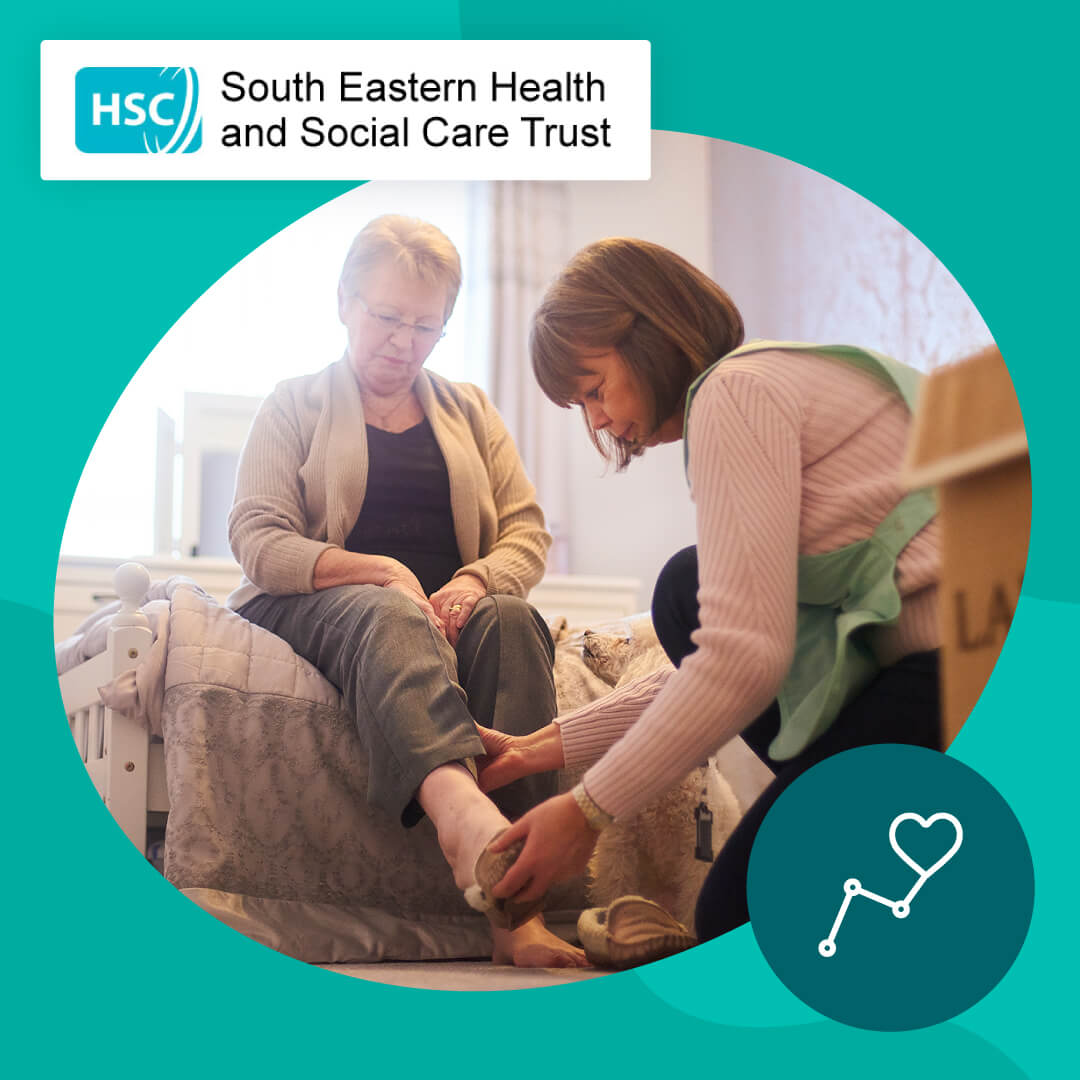

The South Eastern Health and Social Care Trust in Northern Ireland began working with CareLineLive back in 2021 on a project to maximise resources and improve workplace efficiency in it’s home care service which provides over 30,000 domiciliary care visits a week via a team of some 600+ carers and additional office staff.
The Trust operates as part of Northern Ireland’s integrated Health and Social Care (HSC) system, where health and social care services are delivered together under a single structure and are free at the point of use. As a large public-sector organisation, the Trust operates within a complex commissioning, governance and accountability environment – making large-scale digital transformation particularly challenging.
Prior to partnering with CareLineLive, the home care service was managed with traditional tools like spreadsheets and printed paper-based rotas delivered by post.
The slowness and untimeliness of information flows resulted in patients being discharged from hospital but no carer attending a visit due to the rota not arriving in time. Rounds allocating carers to service users were inefficient and care staff were frequently interrupted outside work hours to agree rosters and pass on vital client care information.
These manual processes also created avoidable communication issues for both staff and service users, limiting real-time visibility and making it harder for teams to respond quickly to changes in demand, discharge timings or care needs.
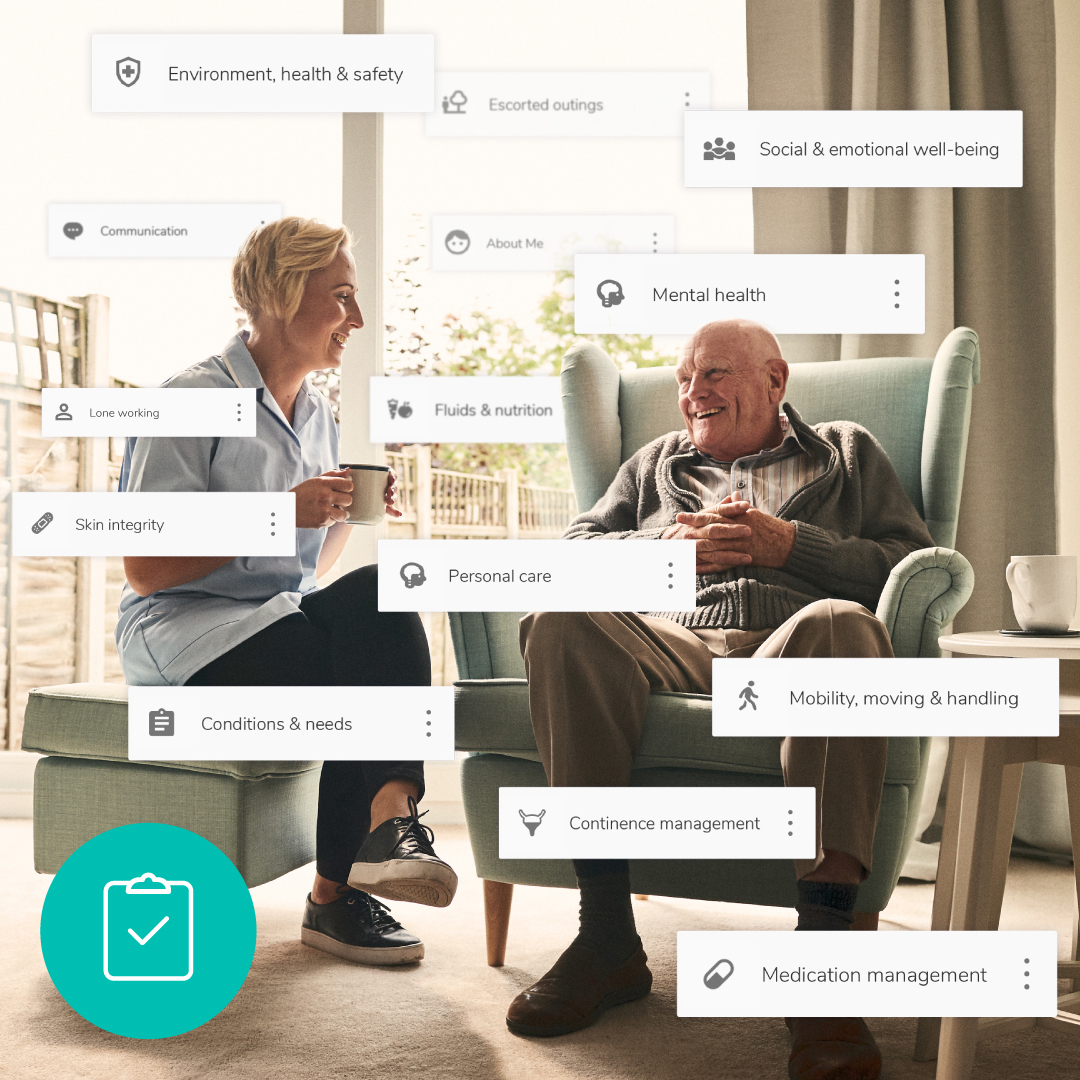
Realising that digitalisation held the key to improved performance and greater efficiencies, SE Trust contracted CareLineLive to deliver an all-in-one digital system that would manage rostering and real-time capacity management, person centred care planning including e-mar and digital visit records, comprehensive carer information, compliance documentation, stakeholder and carer communications and more.
Since implementation, CareLineLive has continued to evolve in partnership with the Trust. Under the leadership of CareLineLive CEO Josh Hough, the platform has been enhanced to reflect the realities of frontline care delivery and the operational challenges faced by large public-sector services.
A significant cultural shift was required not just for carers who were traditionally quite technologically averse but even for office-based staff. Carers were provided with iPads installed with CareLineLive’s Carer Companion app and despite initial concerns of resistance the surveys done since implementation have proved that the concerns were misplaced and the benefits of the transformation have been substantial.
Staff, carer and service user feedback
After the initial pilot study 100% of office staff voted for CareLineLive to be implemented as the permanent solution across the Trust. One staff member said “I was completely against it at the start and was unwilling to embrace it. Now I feel silly because it has all worked out for the best”.
Carers have reported that it “Makes things a lot easier as we have the info before we go into someone’s home” and “So much easier to see where you are working and updates made on my run”.
A family member of one of the service users said “My father has Dementia and rings to say he has seen no-one. I can now diffuse the situation quicker as I can reassure him on that first phone call. It used to take forever to get through to the office who would pass the message to the team then someone would go check with the carer and ring me to say carers had been. It makes life much easier for my dad and I.”
By enabling secure, real-time access to visit information and care notes, CareLineLive has also provided families with greater reassurance that care is being delivered as planned, while allowing concerns to be identified and addressed much earlier.
Financial and efficiency improvements
The results of using CareLineLive reveal significant improvements across the board. Over a period of eight months, an additional 3,919 hours of capacity were created (a £73k value) with no additional recruitment or agency staff hires. Admin time for rota management was reduced from 17 to 12 hours per week – with a capacity gain of 30% – and 87% of service users reported better service delivery. There has been a 96% reduction in missed calls. From 287 to 11 in one year. The Trust has saved £35k a year on postage alone – more than enough to cover the costs of using CareLineLive. Additional savings have been made on paper and printing costs.
With digital systems now fully embedded across the service, the Trust is consistently generating an average of 430 additional care hours every month – helping to create new care packages and support more people to remain safely at home.
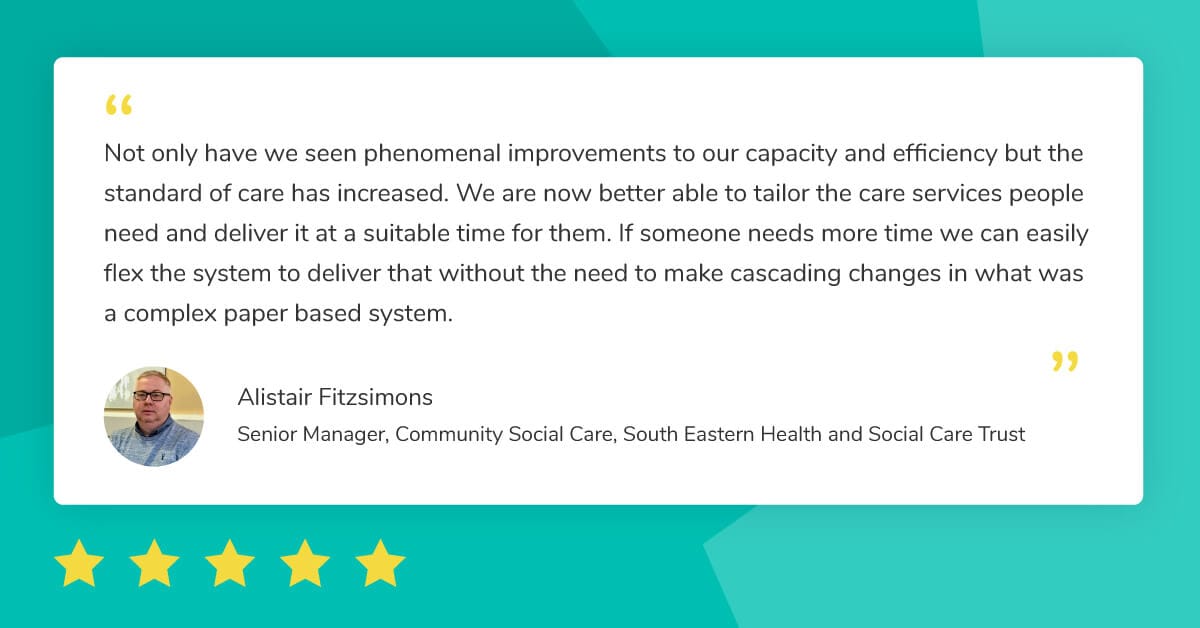
Senior Manager, Community Social Care, Alistair Fitzsimons says “Not only have we seen phenomenal improvements to our capacity and efficiency but the standard of care has increased. We are now better able to tailor the care services people need and deliver it at a suitable time for them. If someone needs more time we can easily flex the system to deliver that without the need to make cascading changes in what was a complex paper based system.
We’ve found the CareLineLive reporting functionality invaluable. We have total confidence in the data that is provided. We can see when each carer has arrived at the service user’s home and when they have left and ensure that each service user is given the time that they need.
The enhanced reporting and interoperability have also supported safer care delivery by improving information flow between teams, reducing the risk of missed visits or medication errors, and enabling more integrated, person-centred models of care.
The reports enable us to look quite forensically at our work which has resulted in even more efficiencies and improvements to service provision better matching supply and demand.
CareLineLive is such intuitive software that after the pilot it was obvious that it would not be difficult to roll these changes out to the entire Trust. The training the Customer Support team provided our staff was excellent. We had been concerned that we might lose some of our more experienced care team due to their unfamiliarity with technology but that’s not happened. We offered training that matched their learning styles them and in some cases provided a little additional support and the feedback is now really positive.
Strong emphasis has also been placed on data security, privacy and compliance with national standards, ensuring that digital transformation has been delivered responsibly and without compromising governance or public trust.
Domiciliary care staff now have a higher degree of credibility – they love that they each have an email address and iPad – it’s really lifted the service and also helped us with recruitment.”
Josh Hough, Founder and Managing Director at CareLineLive, added: “CareLineLive has helped the Trust give carers back valuable time, empowering them to spend more time caring for their clients. The results of the partnership are a true testament to how technology can revolutionise the home care management sector. We look forward to continuing to support the digital transformation of the SE Trust and the results to come.”
South Eastern Trust was the first Trust in Northern Ireland to implement CareLineLive within its home care service. Since then, three further Trusts have followed suit, with the remaining Trust actively considering implementation – demonstrating the scalability and wider system impact of the transformation.
About Health Trusts in Northern Ireland
In England, Scotland and Wales, the National Health Service (NHS) provides health care services while local councils provide social care services. In Northern Ireland these services are combined under what is known as Health and Social Care (HSC). Like the NHS, the service is free at the point of delivery.