

On Thursday, I travelled from the south west to the KiCA Annual Conference 2026 in Maidstone, a place that feels personal to me. It’s where my grandma and much of my family live and where my Mum began her career in social care, training as a nurse.
Being there wasn’t just another event, it was a powerful reminder of how deeply this sector shapes people’s lives, including my own. The agenda was packed, with CQC’s draft assessment framework and social policy dominating the conversation, both issues that directly affect how we operate, deliver care and plan for what’s next. Midway through, news broke that Wes Streeting, Secretary of State for Health and Social Care, had resigned, a development with real implications for the road ahead. More than anything, the day underscored why organisations like the National Care Association and National Care Forum matter so much: they give providers a collective voice and push for the change and improvement our sector urgently needs.
The draft CQC assessment framework came up again and again throughout the day and when the room was asked who wasn’t yet across the detail of the changes, a striking number of hands went up. If you’re in the same boat, you’re far from alone. Our home care sector specialist, Merina Martin, has put together a clear overview of what’s changing and what it means for providers, you can read it here.
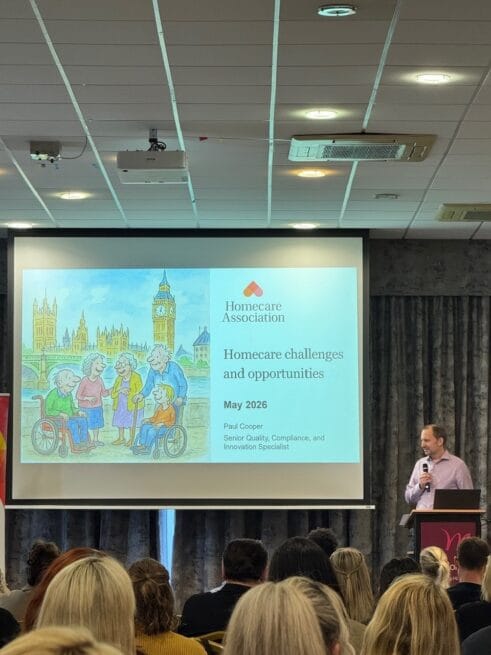
Key challenges facing home care providers: Insights from the Homecare Association
Paul Cooper, Senior Policy Specialist at the Homecare Association, set out some of the most pressing challenges facing homecare providers across the UK right now. Chief among them: financial pressure is mounting, with costs climbing faster than fee uplifts and squeezing the sustainability of providers up and down the country.
At the same time, a constantly shifting political landscape is adding complexity and confusion. This is where organisations like the Homecare Association play a crucial role breaking down policy and advocating for the sector.
Workforce challenges remain front and centre:
- Recruitment and retention pressures
- Changes to international recruitment
- Increasing training needs (especially around delegated healthcare)
- Ongoing concerns around false self-employment
The rise of unregulated care was flagged as a growing concern, with clear implications for quality, oversight and the safety of those receiving support.
Regulating for improvement: CQC’s evolving approach
Jo Wallace, Deputy Director of Adult Social Care at CQC, shared how the regulator is evolving its approach to better support the sector. One of the most significant shifts has been the return to sector-specific teams, allowing CQC to refocus on adult social care and build deeper expertise into inspections – a change that’s already making a noticeable difference on the ground.
Their vision is clear: to become a more collaborative regulator, with a stronger focus on driving improvement and not just measuring performance.
Over the past six months, much of the focus has been on clearing a significant backlog of assessments, a build-up driven by teething issues with the new assessment framework and underlying IT systems. The good news for providers is that real progress is being made and the CQC is currently on track to hit its target of 9,000 assessments by September.
Looking ahead, there’s a strong emphasis on:
- Streamlining processes (including shorter, clearer reports)
- Exploring AI and improved portfolio management
- Potentially reintroducing a “good” rating methodology for consistently performing services
- Finalising the updated assessment framework this summer
- Developing a clearer vision of what good dementia care looks like later this year
Just as importantly, CQC is shifting its lens towards celebrating best practice, not only flagging where things fall short. By spotlighting examples of outstanding care and the real-world impact behind them, the aim is to inspire others and lift standards right across the sector.
A sector under pressure and speaking up
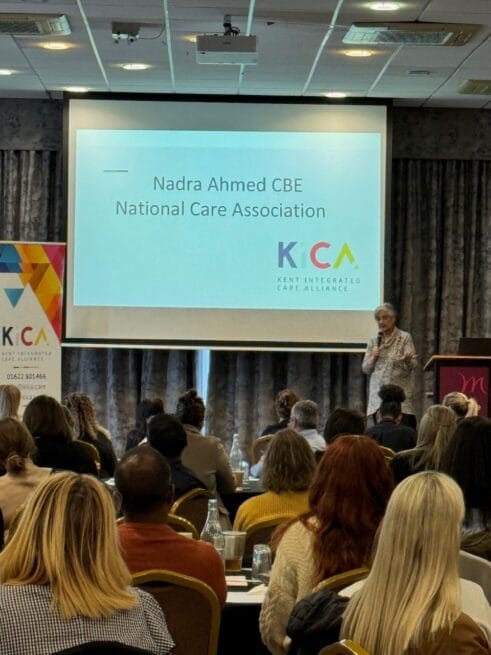
In a powerful talk, Nadra Ahmed of the National Care Association tackled some of the biggest concerns facing providers head-on, starting with the questions on everyone’s lips: fees and funding.
With around 120,000 vacancies across the sector, and growing uncertainty around international recruitment, workforce pressures are only set to intensify. Many overseas care workers are unsure if they’ll still be in the UK in a year, adding further instability. Her advice to providers was clear:
“Be cautious when taking on new packages. Ensure you are properly funded and your teams are fully trained to deliver the required care safely.”
At a national level, Nadra also raised concerns about the lack of a clear social care reform strategy, despite ongoing engagement between sector bodies and government. With recent political changes, even leadership continuity remains uncertain.
But perhaps the most powerful message of all was about changing the narrative. Rather than dwelling on what the sector has lost, we should be shouting about what social care has achieved! The lives supported, the care delivered and the resilience shown day in, day out. Initiatives like Providers Unite are helping to raise public awareness of what social care really does and why it matters.
Despite the challenges, the sector continues to grow, innovate and digitise driven by the investment and dedication of providers themselves.
Nadra’s call to action was clear
“Stand up, speak out and recognise the difference social care makes every single day.”